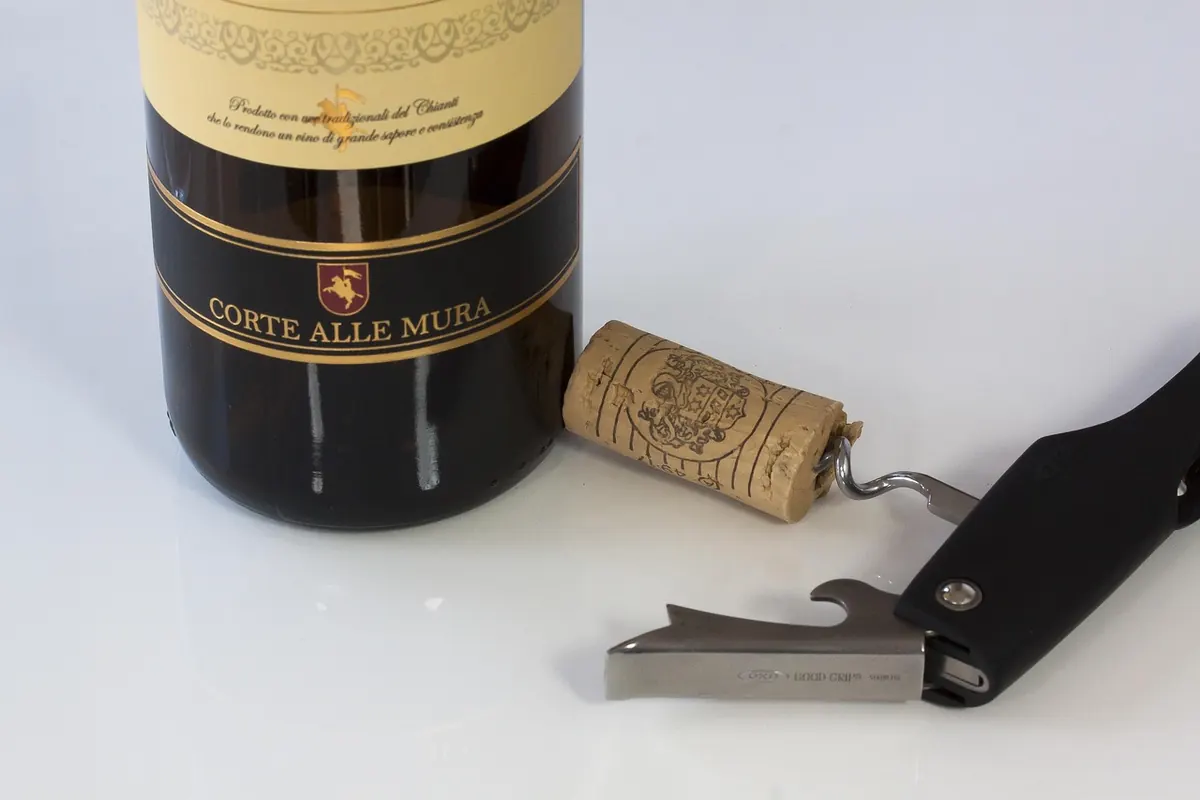
“Cork or screwcap?” usually gets argued about at the table, once the bottle is open. For a wine portfolio, the question belongs at the point of purchase. The closure shapes how quickly a wine develops, how consistent it is from bottle to bottle, how you store it, and how readily a future buyer trusts it.
Get the broad call right and you will drink better bottles in ten years’ time. Get it wrong and the problem tends to surface long after the receipt has faded. The good news is that this is not about loyalty or romance. It comes down to how much oxygen gets in, how predictably, and what you are trying to keep.
What a closure actually does
A closure has three jobs: keep the wine in, keep the air out, and let a controlled trickle of oxygen through over the years.
That last job matters more than most people expect. A little oxygen softens tannin, moves a red from purple towards brick and builds the savoury, honeyed notes we call maturity. Too little and a wine can stay stubbornly closed, or show the struck-match and rubber aromas of reduction. Too much and it goes flat, then tired, then oxidised.
So the debate is never cork versus no air. It is cork versus screwcap on the questions of how much oxygen passes, how fast, and how consistently. With natural cork, that varies from bottle to bottle. With a screwcap, the engineering sits in the liner inside the cap rather than in the metal shell.
Cork: the case for it, and the risk you accept
Natural cork is a cellular material. No two corks are identical in density or pore structure, so no two bottles breathe at quite the same rate. Open a six-bottle case at year ten and you may find one bottle further along than the rest, or one lagging behind. Some collectors enjoy that lottery. Anyone buying a case to serve at a specific dinner does not.
Cork also carries its own faults. TCA, the compound behind the damp-cardboard smell, is the best known; at low levels it can strip fruit without announcing itself plainly. Corks can leak, crumble on the corkscrew, or sit imperfectly enough that wine seeps past the seal — which is why old bottles with stained corks and low fills are treated cautiously.
The upside is real. Cork allows a long, gradual, oxygen-supported development that fine wine buyers have learned to prize, and when a good cork performs properly, the result is difficult to reproduce exactly. That is the argument for keeping cork in a cellar rather than treating it as a legacy format.
Screwcap: consistency, and a different ageing curve
Under a screwcap, the liner does the work. Liners are not all the same: some are close to a barrier, others are chosen to admit a modest amount of oxygen, and a producer may use different liners for a white and a red in the same range. Two bottles from the same case will therefore develop at much the same pace. For a portfolio, that predictability is worth a great deal — what you taste from bottle one is a fair guide to bottle six.
The trade-off is the profile. Wines under low-transfer liners tend to hold their fruit longer and show less of the nutty, leafy, savoury character that cork-aged wine picks up. If you want a Riesling to taste of lime zest for a decade, that is a bonus. If you want a twenty-year-old red to smell like a study with a fire lit in it, it can feel as though the wine is running late.
Reduction is the other point to watch. Seal a wine with very little oxygen and, depending on how it was made, it may show struck-match, flint or rubber notes in youth. These usually blow off with a splashy decant or twenty minutes in the glass, but a bottle poured straight to the table can mislead you. Give screwcapped wines air before you judge them.
How each closure fails
- Cork — random oxidation: one bottle in a case tastes years older than its neighbours, with dried fruit and a flat finish.
- Cork — taint: TCA mutes fruit and leaves a musty, wet-cardboard edge that no amount of decanting removes.
- Cork — leakage and seepage: a poor seal lets wine past the cork, lowering the fill level and speeding up oxidation.
- Screwcap — reduction: reductive aromas in young wines, usually resolved by air but easily mistaken for a fault.
- Screwcap — mechanical damage: a dented or cross-threaded cap, or a cap that has been reseated badly, may not seal at all.
- Both — heat: no closure protects a bottle left in a hot car, a sunny window or a warm cupboard.
Matching the closure to the job in hand
Think about what each wine is for. Aromatic whites and fresh styles you plan to drink over five to ten years are well served by screwcap, where the fruit stays intact and every bottle behaves. Reds built in a traditional mould for two decades, and anything you might one day sell, are still more naturally at home under cork — that is the development the market expects and prices accordingly.
It helps to remember that closure is not a price signal. Plenty of inexpensive wine is sealed under cork, and plenty of serious, expensive wine is sealed under screwcap, particularly from Australia, New Zealand, Austria, Germany and a growing number of French producers. Judge the producer’s track record with the closure rather than the closure on its own. A grower who has bottled under screwcap for fifteen vintages knows how their wines behave; a producer trying it for the first time is a different proposition.
Practical rules for a closure-aware cellar
- Buy in threes or sixes where you can. One bottle tells you almost nothing; three let you open one young, one when you think it is ready, and one later.
- Record the closure with your tasting notes, alongside vintage and serving temperature. Over five years, patterns emerge that no general rule can give you.
- Ask about the liner if you are laying a wine down for a decade or more. Importers and technical sheets often name it, and that tells you more than the word “screwcap” alone.
- Store cork-sealed bottles on their side so the wine keeps the cork swollen and the seal tight. Screwcaps can stand upright without harm.
- Keep the cellar steady. Around 10–14°C is a sound general target,
Photo: stux / Pixabay