Most wine collections fail in the same quiet way. You buy what you like, which is the right instinct, and then you keep buying it. Two years later there are eleven bottles of the same Rioja, a magnum of something you are saving for a day that has not yet arrived, and nothing at all that suits a roast chicken on a Wednesday evening.
A balanced cellar does not mean equal numbers of everything. It means having bottles that answer different questions: what do I open tonight, what is worth keeping, what do I want to learn about, and what is earmarked for a proper occasion. Five categories cover nearly all of it, and you can run them from a cupboard under the stairs or from a modest wine fridge.
Why a one-dimensional cellar lets you down
There are two common failure modes. The first is the all-drink-now cellar: pleasant, easy wines bought week by week, none of which will be better in three years, and nothing in reserve when something worth celebrating turns up. The second is the all-future cellar, built on the assumption that you will one day have the patience, the space and the appetite for nothing but serious reds. Meanwhile you drink supermarket Pinot Grigio and the good bottles sit there getting older without being enjoyed.
Both problems come from buying without a purpose. Give every bottle a job and the cellar starts to work for you rather than against you.
The five categories
Drink-now wines
These are the bottles you are happy to open without a second thought: a crisp Picpoul de Pinet, a juicy Beaujolais-Villages, an unoaked Chilean Sauvignon Blanc, a soft Côtes du Rhône. Keep six to twelve within easy reach. The test is simple — if opening a bottle on a Tuesday feels like a decision, it is in the wrong category. These wines are not meant to improve; they are meant to be drunk.
Short-term wines
This is the working middle of the cellar: wines that will be noticeably better in two, three or five years but do not need a decade. Rioja Reserva, Chianti Classico, Côtes du Rhône Villages, good Cru Beaujolais, Loire Cabernet Franc, German Riesling Trocken, Australian Shiraz from a serious producer. Buy these in threes and fours. They fill the gap between tonight and the distant future, and they are where most of your drinking pleasure will come from.
Long-term wines
Bottles bought with patience in mind: classed Bordeaux, red Burgundy from a good village, Barolo, Mosel Riesling, vintage Port, top Chablis, sweet wines from Sauternes or Tokaj. Buy in twos or threes rather than sixes — enough to open one early and learn from it, with another left to develop. Two conditions apply. You need somewhere genuinely steady to keep them, and you need to accept that you will not touch them for years.
Experimentation wines
Every cellar should have a small shelf of things you are not sure about. A skin-contact white from Georgia or Slovenia, a Greek Assyrtiko, a Jura Savagnin, a dry Sherry, a Madeira, an English sparkling wine, a Xinomavro from Naoussa. Buy these as singles. Their purpose is education rather than stock, and the ones you love will find their way into the other categories.
Occasion wines
These have a job to do: Champagne for a birthday, vintage Port for Christmas, Sauternes for a blue cheese, an older red with a story attached. Keep three or four, know exactly where they are, and do not bury them behind the weeknight bottles. The point of an occasion wine is that it is there when the occasion arrives unannounced.
Getting the proportions right
There is no formula, because the right mix depends on how you drink. A rough starting point for a sixty-bottle cellar might be about a third drink-now, a third short-term, a quarter long-term, with the remainder split between experiment and occasion. Then adjust using your own habits:
- Count what you actually drank last month. If most bottles went with midweek dinners, the drink-now layer needs to be bigger than you think.
- Note how often you host. Regular entertaining pushes occasion wines up; quiet households need fewer.
- Be honest about storage. Without steady, cool conditions, keep the long-term category small and spend the money on short-term wines instead.
- Protect the drink-now layer. It empties fastest, and it is what stops you opening a long-term bottle years too early.
Buying well in each category
Buy drink-now wines in mixed cases, ideally from an independent merchant who will happily put one together for you. Buy short-term wines in threes when a vintage you like appears, and note the vintage down — the same wine shifts character year to year. Buy long-term wines in pairs of the same bottle so you can follow one wine's development properly rather than guessing across a mixed dozen. Buy experiments as singles. Buy occasion bottles when you see something good, not when you desperately need one, because the second situation always costs more and delivers less.
Storing it sensibly in a UK home
Steady temperature matters more than a particular number. A cupboard that sits between about ten and sixteen degrees all year is better than a garage that swings from freezing to warm and back. Keep bottles away from boilers, radiators, kitchen ovens and sunny windowsills, and away from washing machines and speakers where you can. Light and vibration do quiet damage over years.
Screw-capped and sparkling wines can stand upright without harm; anything under cork that you intend to keep for years should lie down so the cork stays moist. If you are laying down cases for a decade or more, ask a merchant about bonded storage, and take proper advice on the duty and tax position before committing — the rules are not obvious and change from time to time. Finally, keep a record. A notebook or a simple spreadsheet listing what you own, where it is and when to drink it is worth more than any gadget.
Rebalancing once a year
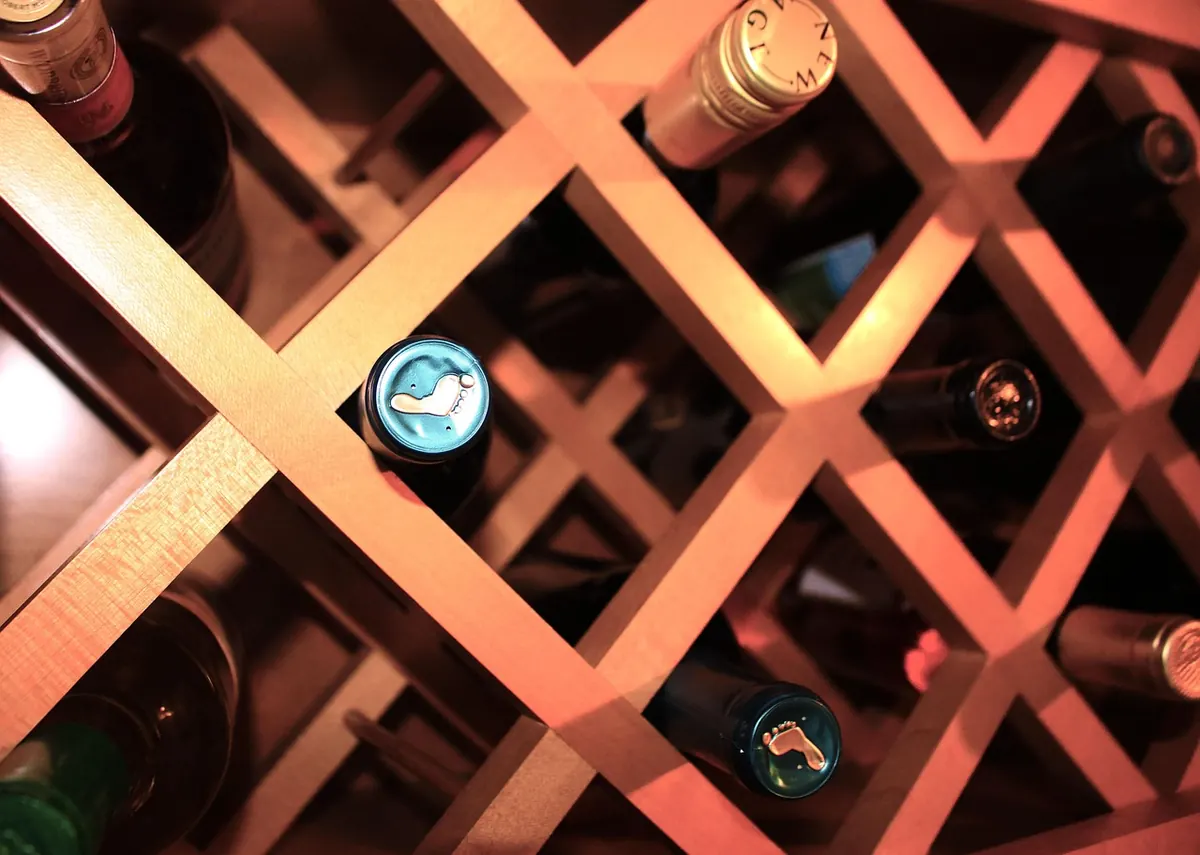
Once a year, empty the rack and look at what you have. Count each category. Open one bottle you have been hoarding and see how it is drinking. Two things usually emerge: some long-term wines are readier than you assumed, and the drink-now shelf is thinner than you thought. Reorder accordingly, and give away or drink anything you no longer want — a cellar is not an archive.
Start with next month
Before you buy anything else, write down the next six weeks of meals and occasions. Then buy for them: half a dozen bottles you will drink this month, two or three short-term wines, one oddity, and one bottle for a birthday you can already see in the calendar. That is ten bottles covering all five categories, and it will serve you better than a case of anything bought blindly. Repeat it a few times a year and you will end up with a cellar that is genuinely useful rather than merely full.
Photo: aimk253 / Pixabay