Building a wine portfolio sounds straightforward: buy good bottles, keep them somewhere cool, wait. In practice, most new collections wobble in the same predictable places. Someone buys six bottles of a 98-point wine they have never tasted. Someone else fills a garage with cases and lets a hot summer do its work. None of it is fatal, and none of it is unusual. The five mistakes below are the ones worth fixing early, while they are still cheap to correct.
Mistake one: buying the score rather than the wine
Critics' scores are useful shorthand, but they measure one bottle, on one day, tasted by one person with a particular palate. A high number tells you a wine impressed someone. It does not tell you whether you will enjoy drinking it. Nor is it a secret: by the time a score is published, merchants have usually adjusted their pricing to match, so you are rarely buying a bargain. You are buying reassurance.
The bigger risk is ending up with a cellar of wines you admire rather than like. A structured, tannic red may be magnificent in fifteen years and joyless at your table next spring.
A workable rule: taste before you commit to a case. Buy a single bottle, or try it by the glass somewhere. If you cannot taste the current vintage, taste the producer's previous one. Read the tasting note for descriptors — fruit, oak, acidity, tannin — and let the number be the last thing you weigh.
Mistake two: treating storage as an afterthought
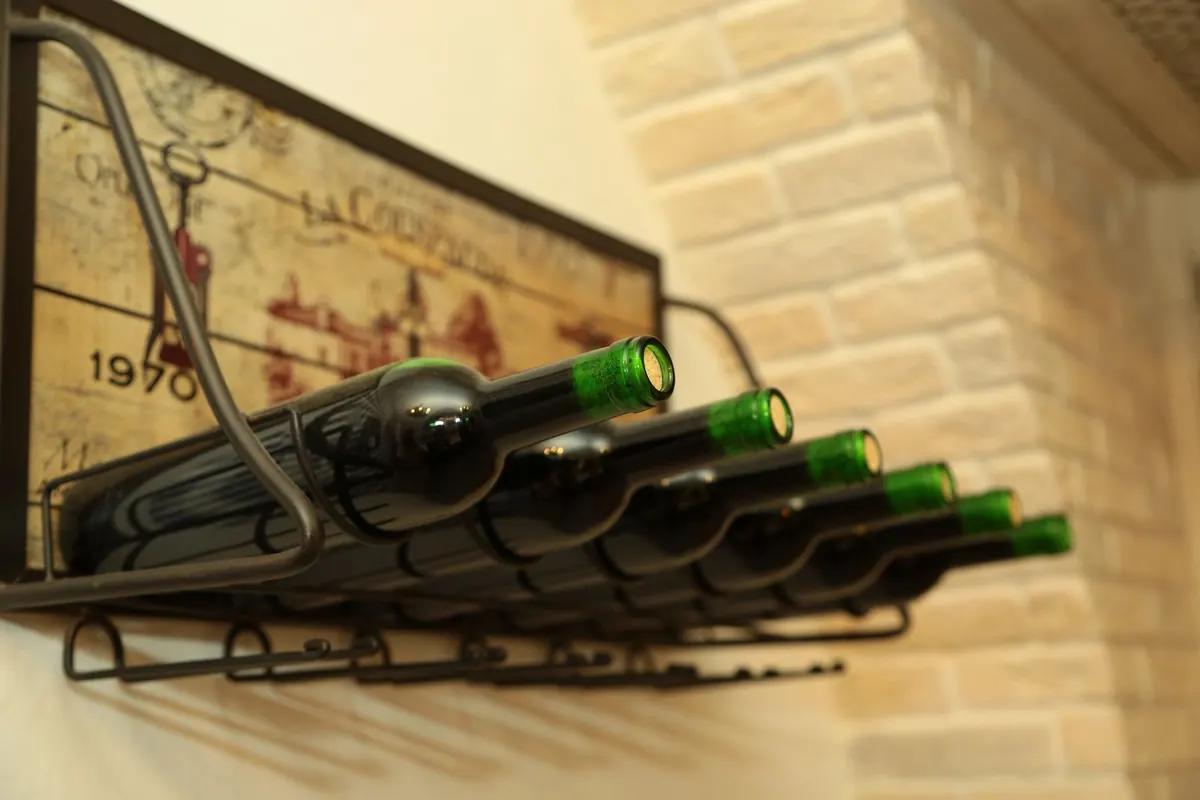
Poor storage is the fastest way to lose money in wine, and it happens quietly. Heat speeds up ageing and flattens fruit. Repeated temperature swings are worse than a steady, slightly warm room, because they push wine in and out of the cork. Light degrades it, vibration disturbs it, and dry air shrinks corks until air gets in.
What decent storage actually looks like
- A steady temperature, ideally somewhere between 10°C and 14°C, with slow seasonal change rather than daily swings
- Humidity of roughly 50 to 70 per cent, so corks stay plump and sealed
- Darkness, low vibration and bottles lying down
- Distance from boilers, radiators, windows and outside walls
- A cheap thermometer and hygrometer, so you know what you are dealing with rather than guessing
If your flat or house cannot offer that, you have two honest options: a wine fridge for bottles you plan to drink soon, and professional storage for cases you intend to hold. Storage is not free, and it is worth checking the annual cost per case before you commit a modest wine to a ten-year plan. If the carrying cost is a meaningful share of the bottle's value, drink it now or leave it on the shelf.
Mistake three: putting too much in one basket
New collectors buy what they know best, and they buy it heavily. Burgundy lovers buy Burgundy. Fans of one grower buy every cuvée. The result is a portfolio that behaves like a single bet, exposed to one hailstorm, one difficult vintage, one change of winemaker, one shift in fashion — or simply to a change in your own taste.
Diversify deliberately, and not only by geography:
- Regions and grapes: a Rhône red, a Loire white, a German Riesling, something Italian or Spanish alongside your favourites
- Price tiers: everyday bottles, a solid middle band, and a small number of special ones
- Maturity: some wines ready to drink now, some to hold for a decade
- Formats: mostly standard bottles, with a magnum or two for occasions
A rough guardrail helps: keep any single region or producer to no more than about a third of the cellar's value. It leaves room to act when something genuinely interesting appears.
Mistake four: failing to track what you own
Most collectors underestimate how quickly records fall apart. Two years in, you own bottles in three places, you cannot remember what you paid for the 2016s, and you are not certain whether the case at the back holds six bottles or four. That matters for insurance, for resale and provenance, and for the simplest question of all: what should I open tonight?
You do not need expensive software. A spreadsheet with columns for producer, cuvée, vintage, format, quantity, merchant, purchase date, price paid, storage location, planned drinking window and a notes field will carry you a long way. Photograph labels as you log them and keep receipts and delivery notes. For older or finer bottles, note condition — fill level, label, capsule — so you know exactly what you have before you come to sell.
Update the log when you drink a bottle, not when you get round to it. A cellar record is only as useful as it is current.
Mistake five: having no plan for the end
Buying is the easy part. Knowing what the collection is for is harder, and it shapes every decision you make. Ask yourself honestly whether you are building something to drink, something to hold as an asset, or a mixture of the two.
For drinking, the trap is patience. It is easy to fill a cellar with wines that need fifteen years and end up with nothing ready on a Tuesday. Keep a rotating layer of bottles for the next three to five years and let the long-haul wines sit behind them.
For investment, be realistic. Wine is not a quick market to exit: selling takes time, buyers care about proven provenance and pristine cases, and storage and selling costs eat into returns. A wine in fashion this year may not be next year. If the figures matter to you, take proper financial and tax advice before treating wine as an asset class rather than a passion with benefits.
Either way, write the intention down, including roughly when you plan to open or sell each case. A line in your records turns a vague hope into a decision.
A short routine that prevents most of this
Five mistakes sound like a lot to hold in your head. In practice, a brief routine covers all of them:
- Decide the purpose and a rough annual budget before you buy anything.
- Sort storage first. If the conditions are wrong, change your buying rather than your hopes.
- Taste one bottle, then backfill in twos or threes instead of whole cases.
- Log every purchase and every bottle opened, with price, provenance and a drinking window.
- Review the cellar twice a year, in spring and autumn, checking for gaps, duplicates, wines nearing their window, and whether the balance still matches how you actually drink.
Then buy something you are looking forward to opening. A portfolio that gives you pleasure along the way is far easier to keep than one built purely on the promise of a future payday.
Photo: Dmitry Sidorov / Pexels