England is not the first place most drinkers think of when they open a wine list, and that is changing fast. Vineyards now run from Cornwall to Norfolk, and the best bottles — mostly sparkling, increasingly still — hold their own against anything made on the other side of the Channel. What confuses newcomers is geography. Sussex, Kent and Hampshire look similar on a label, yet the wines taste different. This guide maps the main regions, explains the soils and climates behind them, and tells you what each one means when you are standing in a shop or reading a cellar door list.
A marginal climate that shapes every bottle
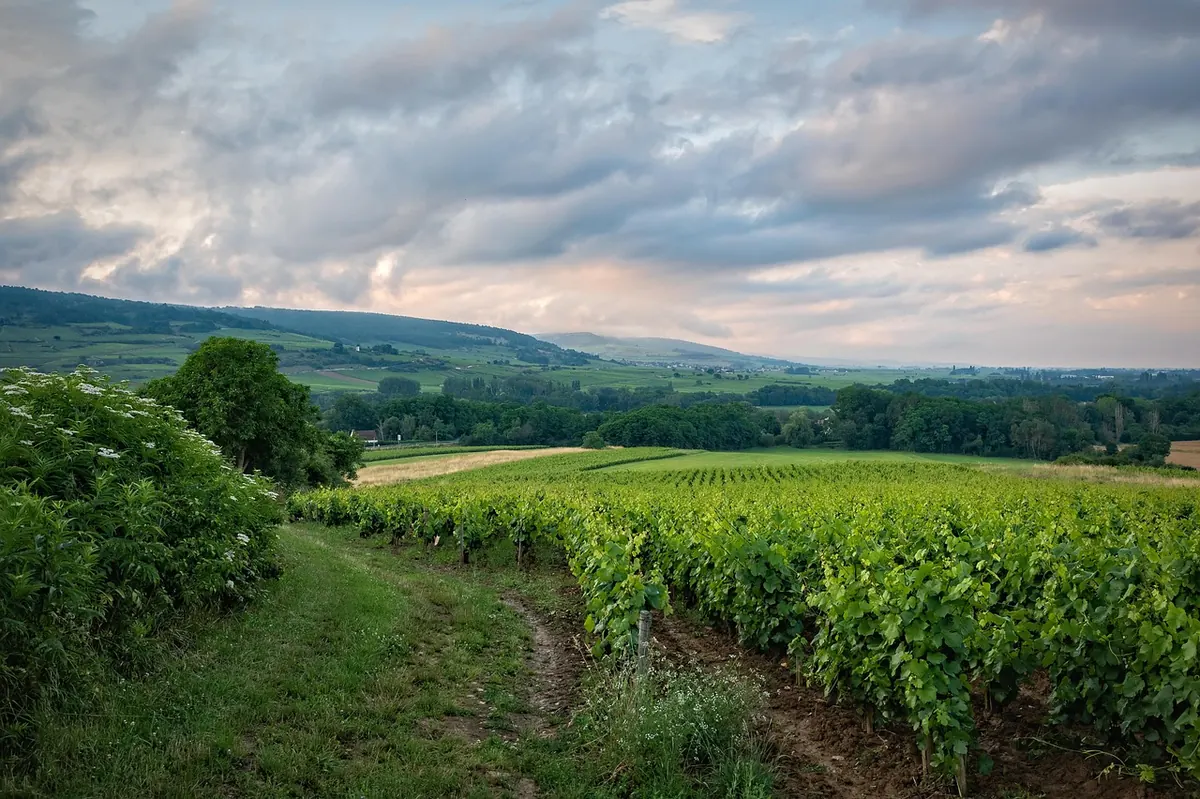
England sits near the northern edge of where grapes will ripen, and that single fact explains most of what you taste. Summers are cool, daylight is long, and the sea softens both winter frost and summer heat. The real risk is rain in September and October, just as sugar levels climb and flavour develops. Growers answer this with early-ripening varieties, careful canopy work and, increasingly, ruthless site selection on warm, south-facing slopes.
The reward is acidity. English grapes keep a brisk, mineral edge that warmer regions lose, and that is precisely what makes traditional-method sparkling wine work here: high acid, moderate alcohol, fine mousse.
Soil matters more than you think
Two soil types dominate the south-east. Chalk, the same band that runs under Champagne, appears in the South Downs, the North Downs and the Hampshire hills. It drains freely and pushes vine roots deep. Greensand and clay sit alongside it, holding more water and giving fuller, rounder wines. When a producer talks about a single-vineyard bottling, soil is usually what they mean.
Sussex: the engine room
Sussex has more planted area than any other English county and, since 2022, its own protected designation of origin covering both East and West Sussex. The South Downs offer long chalky slopes; the coast brings a mild, breezy climate.
Sparkling wine is the flagship. Look for Chardonnay-led blends with fine, persistent bubbles and a tight, citrusy backbone. Nyetimber in West Chiltington, Ridgeview near Ditchling and Rathfinny in the Cradle Valley are the names you will see most. Still wines improve every year: Bacchus with elderflower and grapefruit, Pinot Gris, and pale, savoury Pinot Noir rosé. If you are new to English wine, start here.
Kent: chalk, shelter and variety
Kent's vineyards cluster on the North Downs and around the Weald. Parts of the county are drier and more sheltered than Sussex, and the range of styles is wider — still whites, sparkling, and a small but serious amount of red.
Chapel Down in Tenterden and Gusbourne near Appledore have done much to build Kent's reputation, with Balfour's Hush Heath estate and Simpsons near Canterbury close behind. Kentish still whites often show more weight and orchard fruit than their Sussex equivalents, and the sparkling wines are a touch broader and creamier.
What to look for on a Kent label
Chardonnay-dominant sparkling, Bacchus and Ortega for still whites, and Pinot Noir for rosé and light reds. Serve those reds cool — fifteen minutes in the fridge — rather than at room temperature.
Hampshire: quiet precision
Hampshire's chalk runs through the Test and Itchen valleys, and the county has a long memory: Hambledon, planted in the 1950s, is often described as England's oldest commercial vineyard. Today Exton Park, Danebury and Jenkyn Place are among the estates shaping its style.
Expect restraint. Hampshire sparkling tends to be leaner and more mineral than Sussex, with Chardonnay prominent and a longer, quieter finish. The still whites are precise rather than flamboyant, which makes them excellent with food.
Beyond the big three
England's wine map keeps expanding. These regions are worth seeking out:
- Surrey and the North Downs: Denbies, Greyfriars and Albury produce reliable sparkling and fresh, aromatic whites on chalk and greensand.
- Dorset and the south coast: Langham and Furleigh Estate make elegant sparkling wines with a saline edge.
- Devon and Cornwall: a wetter, milder climate and lower-yielding sites. Camel Valley in Cornwall and Sharpham in Devon have long track records with sparkling and still wines alike.
- Essex and East Anglia: New Hall in Essex and Winbirri in Norfolk show what warm, dry eastern sites can do with Bacchus and Pinot.
- Gloucestershire and the west: Three Choirs and other long-established estates keep the tradition alive on limestone and clay.
- Across the Welsh border: Monmouthshire and the Wye Valley now produce serious sparkling wine of their own.
The grapes you will see, and what they mean
- Chardonnay, Pinot Noir and Pinot Meunier: the sparkling trio. Chardonnay brings citrus and structure, Pinot Noir brings red-fruit weight, Meunier brings roundness and early ripening.
- Bacchus: England's signature still white. Aromatic, with elderflower and nettle, sometimes compared to Sauvignon Blanc.
- Ortega, Siegerrebe and Solaris: German-bred, early-ripening and perfumed. Expect peach and rose, occasionally with a little sweetness.
- Seyval Blanc, Reichensteiner and Madeleine Angevine: reliable workhorses for light, fresh whites, sometimes made into sparkling.
- Pinot Gris and Pinot Blanc: increasingly used in both still and sparkling blends to add texture.
- Pinot Noir, Rondo and Regent: Pinot Noir makes the best rosé and light red; Rondo and Regent add colour and fruit on cooler sites.
How to buy English wine with confidence
Start with the label. "English wine" means the grapes were grown in England. "British wine" means it was made here from imported concentrate — a different product entirely, and rarely worth the money.
Then follow a few simple habits:
- Buy by producer, not just by county. Regional style is a guide, not a promise, and the estate matters more.
- Check the vintage. Cool-climate years vary enormously. A good producer in a difficult year still beats a poor producer in a fine one.
- Look for "traditional method" if you want the fine, toasty complexity you would expect from Champagne.
- Serve sparkling at 8–10°C, not straight from the fridge, so the aromas open up.
- Visit if you can. Most vineyards sell at the cellar door and will let you taste before you commit to a case.
English wine is expensive to make, and prices reflect that. Buy a bottle or two from a producer you like rather than a mixed case of strangers, then taste them side by side — Sussex against Kent, sparkling against still. One evening of that
Photo: Tama66 / Pixabay